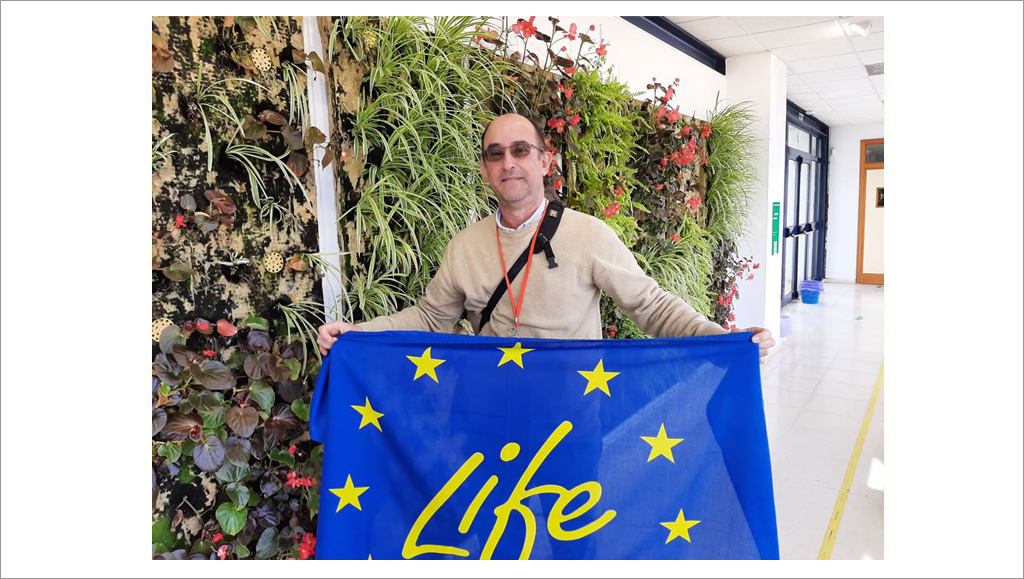
From March 7 to 9, 2023, the LIFE-myBUILDINGisGREEN project has visited the educational centres in Spain and Portugal that serve as pilot buildings for the implementation and testing of the Nature-based Solutions implemented by the project.
The main purpose of this visit was to carry out a general sampling to determine the number of bioindicator species, generally mosses and lichens, in the three schools in order to measure indicator 4.3 of the project’s Indicator Monitoring Plan. In addition, the visit was used to carry out a second sampling of the rest of the biodiversity associated with the buildings to obtain more data necessary for monitoring indicators 3.1 (increase in animal and plant biodiversity) and 3.2 (number of native plant species).
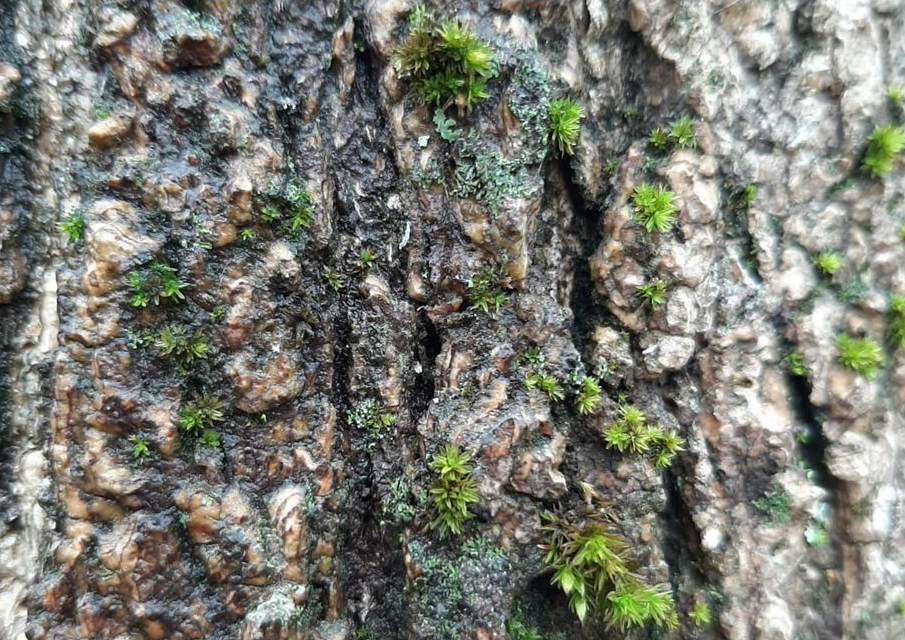
Image of Orthotrichum sp. observed on a tree at Falçao school (Porto) © LIFE-mBiG
Sampling of the lichens has been done by taking portions of the lichens that allow them to be identified in the laboratory. When these are on trees, they are separated with a little knife and preserved in paper envelopes, allowing them to dry in the envelopes, which will prevent them from being damaged by the action of other fungi. The same process applies to lichens on rocks which are foliaceous and can be easily separated from the substrate. In the case of small species that grow embedded in wood, concrete or rock, removal is carried out with the help of transparent adhesive tape that is stuck to the surface of the lichen by means of pressure and a scalpel blade with which the lichen is cut from the substrate. This strip of adhesive tape with the adhering lichen is folded back on itself and placed in a microcentrifuge tube (usually 1.5 mL) suitably labelled.
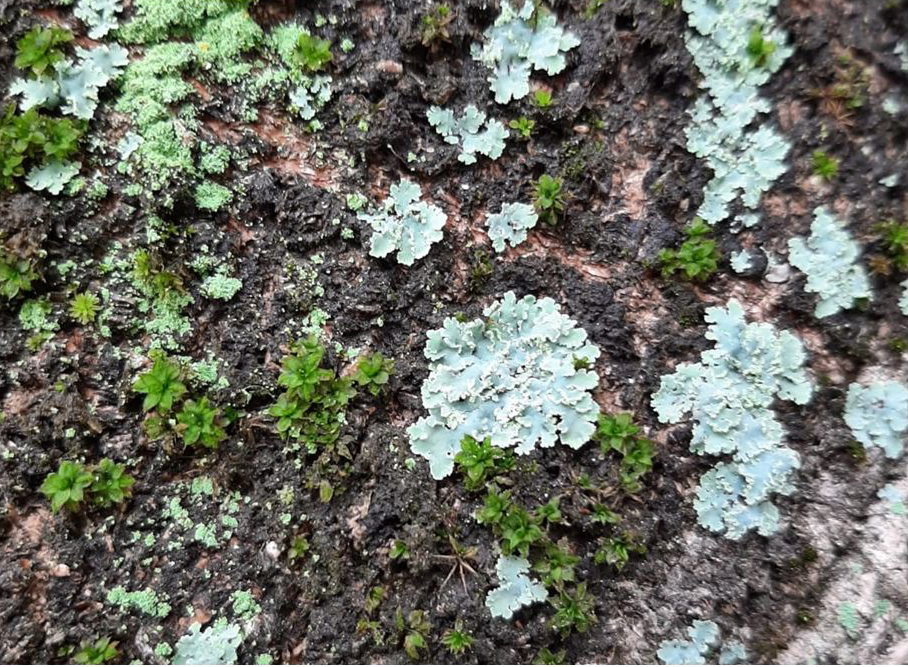
Unidentified lichens and Syntrichia papillosa observed on a tree at the Horta das Figueiras school (Évora) © LIFE-mBiG
For bryophytes, it is sufficient to separate a portion with a little knife and place it in a paper envelope where it is left to dry. It is advisable to take macro-photographs of the lichens and bryophytes so that they can be identified.
Preliminary results of these biodiversity sampling events will be available at the end of the project. Due to the slow growth of the sampled bioindicator organisms, additional sampling will be necessary for at least 5 years after the end date of the project to obtain more conclusive results. The planning of these samplings will be reflected in the After-LIFE Plan, which is one of the deliverable documents of the project.
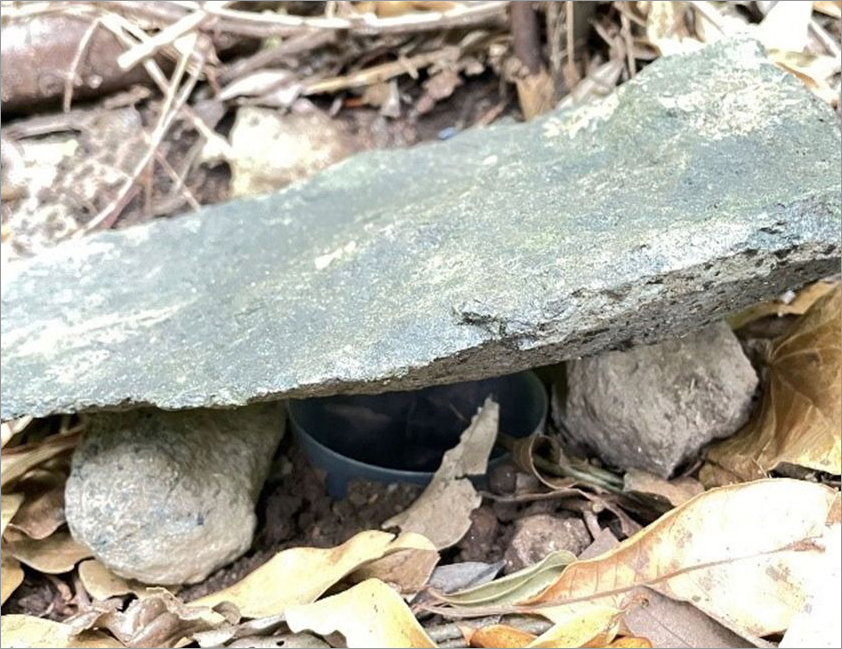
Falling trap for invertebrate sampling © LIFE-mBiG
For all news and events related to the LIFE-myBUILDINGisGREEN project, we recommend following the project’s Twitter and LinkedIn channels.