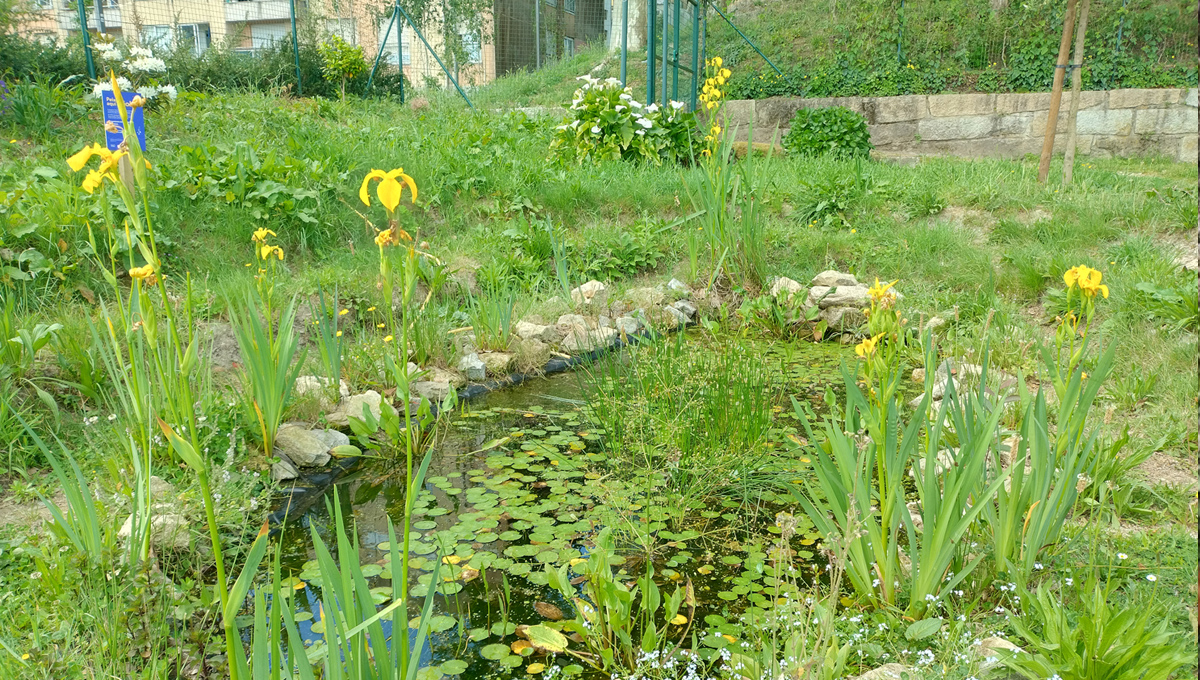
The ecological restoration and maintenance work at Charco da Horta da Oliveira — a pond that collects rainwater from the roofs of Escola Básica do Falcão (Falcão Primary School) — continues to yield very positive results, establishing this site as an important refuge for biodiversity conservation in an urban setting.
Since the pond was redeveloped in 2024, there has been very significant ecological progress. During that work, a range of species typical of wetlands was introduced, with the aim of recreating a functional habitat, improving the site’s ecological conditions and encouraging fauna to settle. Among the plants introduced are the yellow flag iris (Iris pseudacorus), important for stabilising the banks and improving water quality, and the fringed water lily (Nymphoides peltata), a floating aquatic plant that is classified as threatened at national level.
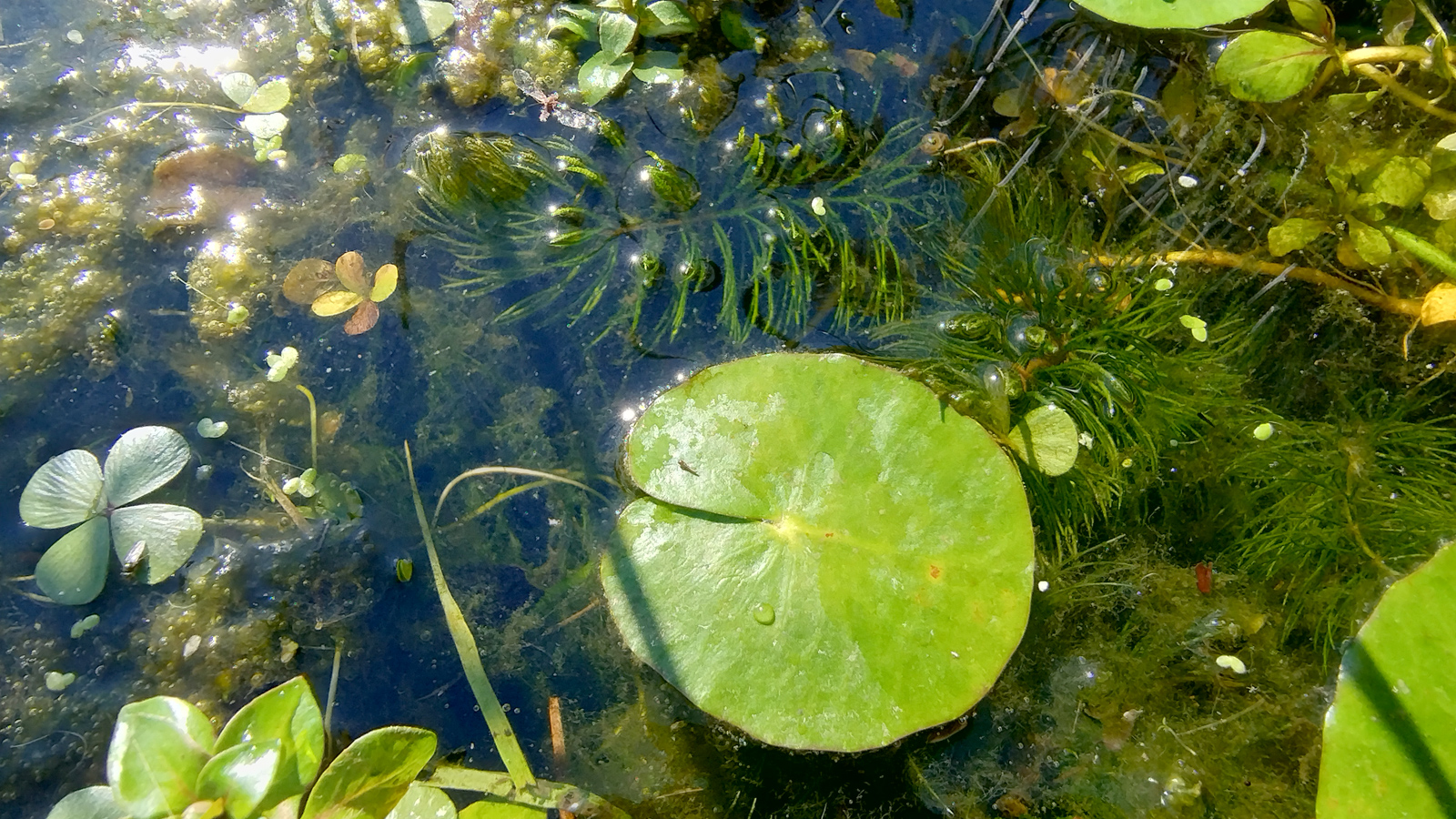 Flora at mBiG-pond © Câmara do Porto
At the same time, three amphibian species were reintroduced: the Iberian water frog (Pelophylax perezi), the common midwife toad (Alytes obstetricans) and Bosca’s newt (Lissotriton boscai), setting in motion the recolonisation of this new habitat.
Two years on, monitoring carried out in the first quarter of 2026 confirms the success of the work undertaken. The species introduced initially are now well established, and the aquatic and marsh vegetation has steadily enriched the pond, with the arrival of new species of high ecological interest. Notable among these is the hairy four-leaf clover fern (Marsilea batardae), an aquatic fern endemic to the Iberian Peninsula and classified as a threatened species in Portugal. Its establishment is an important contribution to the conservation of threatened flora and demonstrates the potential of these habitats to host priority species.
The amphibian community has likewise seen very notable development. In addition to the previously introduced species, whose breeding has since been confirmed, the pond is now also home to the marbled newt (Triturus marmoratus), introduced in 2025, and the fire salamander (Salamandra salamandra), a species already present in the surrounding area that has begun using the pond as a breeding site.
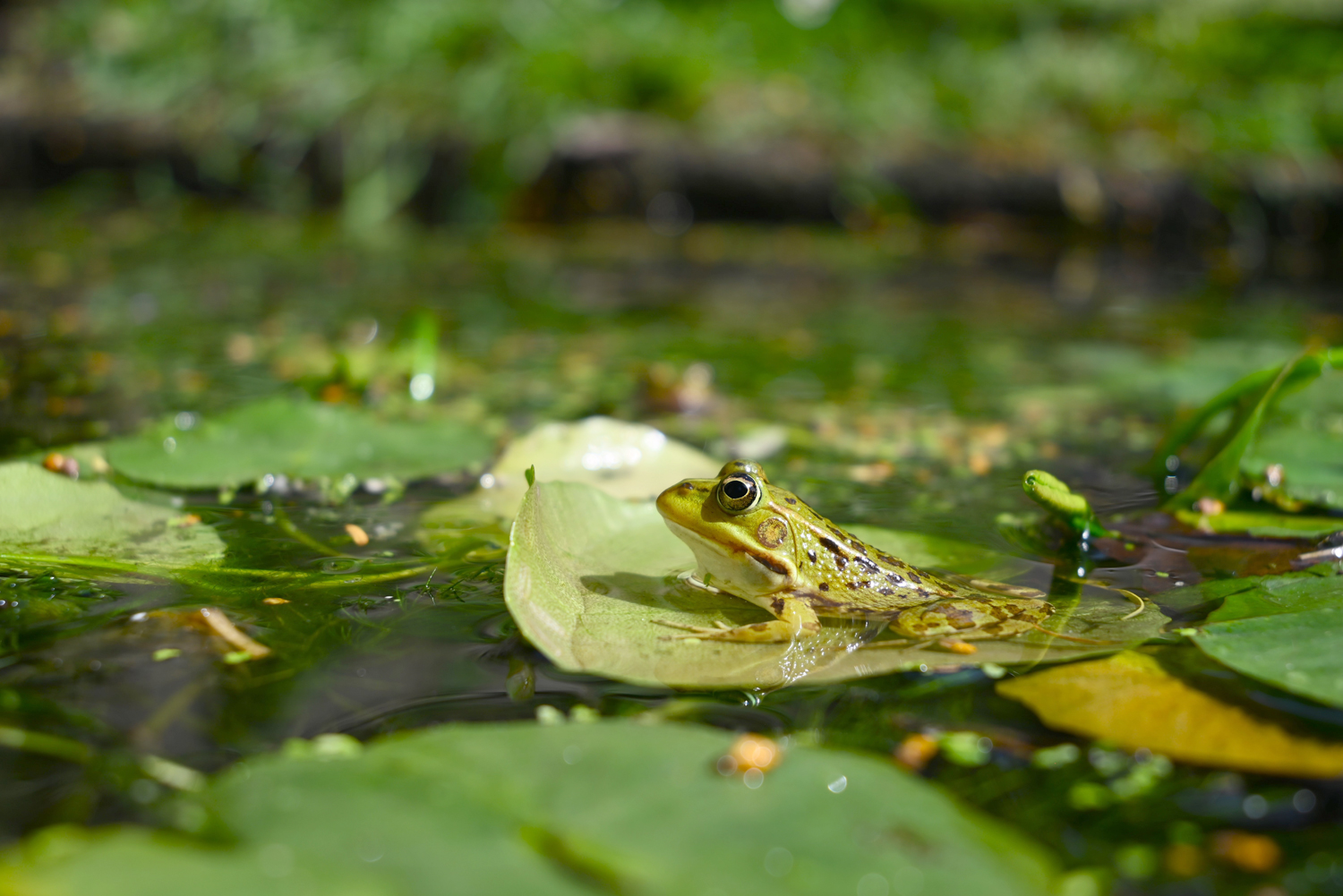 An amphibian at mBiG-pond © Câmara do Porto
A positive response is also evident among macroinvertebrates, which are important bioindicators of water quality. The presence of species such as the pond olive mayfly (Cloeon dipterum), the red-veined darter (Sympetrum fonscolombii), the keeled skimmer (Orthetrum coerulescens) and the large red damselfly (Pyrrhosoma nymphula) shows that the habitat now offers suitable conditions for the breeding, feeding and shelter of different groups of fauna.
The changes observed at Charco da Horta da Oliveira demonstrate the importance of creating and restoring urban wetlands. These small ecosystems play a fundamental role in promoting biodiversity, improving environmental quality and enhancing the ecological value of urban green spaces. This pond, and especially the fauna it supports, also serves an important purpose for those who use the allotment, by helping to control potential agricultural pests biologically.
The pond is also an educational space. Alongside the activities of the “A minha Escola é Verde” (My School is Green) educational programme, since 2025 it has also hosted the “Roteiro dos Anfíbios do Porto” (Porto Amphibian Trail), an initiative open to anyone with an interest, which aims to promote appreciation and respect for biodiversity by connecting people with naturalised spaces that are essential to the city’s sustainability.
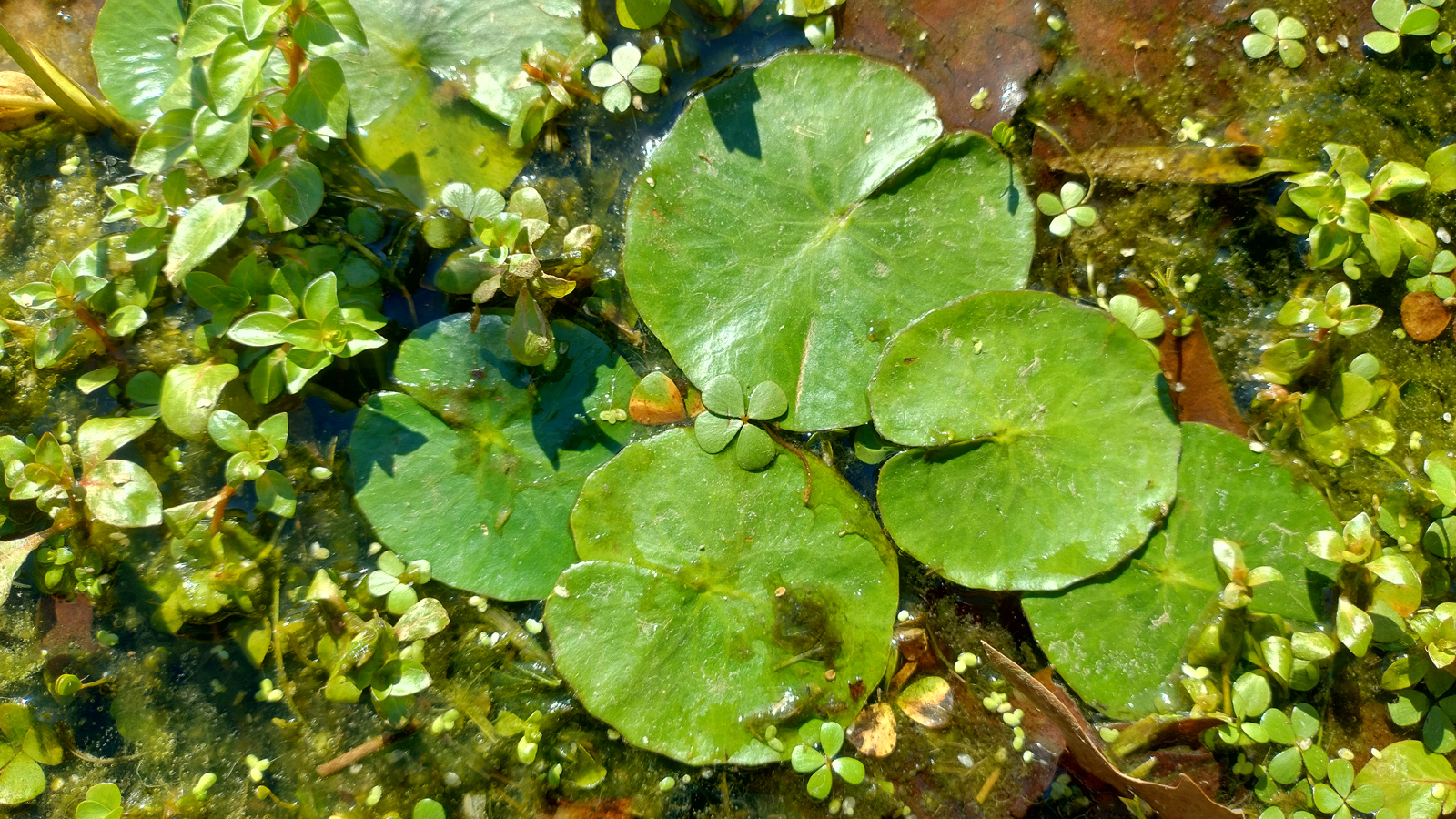 The species at mBiG-pond serve as a valuable educational resource © Câmara do Porto
The monitoring and restoration of the city’s water bodies is carried out by Porto City Council, with scientific coordination provided by the Interdisciplinary Centre of Marine and Environmental Research (CIIMAR).
For all news and events related to LIFE-myBUILDINGisGREEN, we recommend following the project’s Twitter and LinkedIn channels.