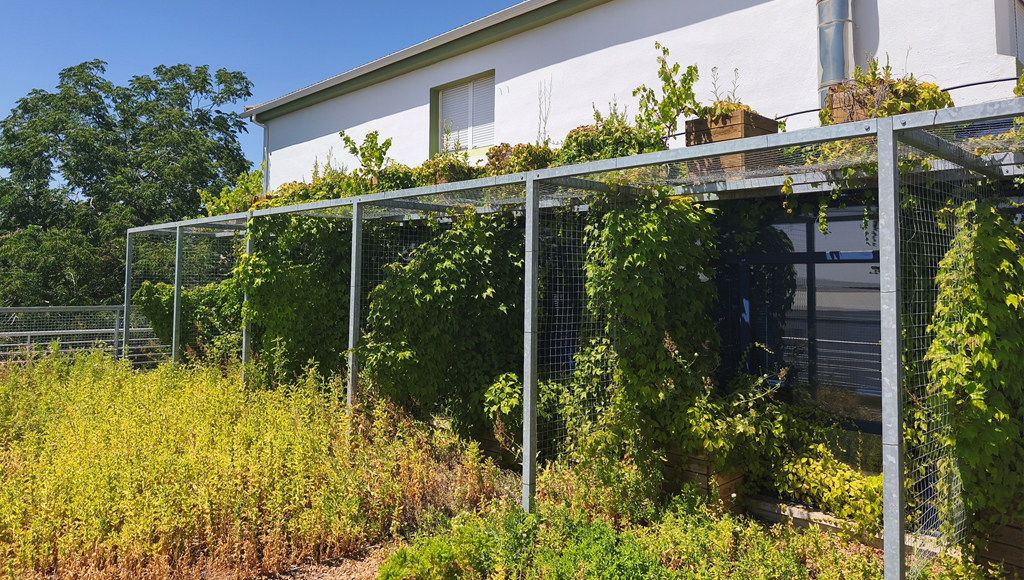
Biodiversity monitoring associated with the Nature-based Solutions (NbS) implemented by the LIFE-myBUILDINGisGREEN project at C.E.I.P. Gabriela Mistral continues to progress. During 2026, the fifth evaluation campaign was carried out at the educational centre in Solana de los Barros (Badajoz), further consolidating the time series used to monitor these structures and assess their impacts within the framework of the project.
Since the implementation of the interventions, the Royal Botanic Garden (RJB-CSIC) has conducted regular monitoring of the plant and invertebrate communities present at the site. Thanks to the application of a consistent methodology over the years, it has been possible to analyse how NbS contribute to increasing local biodiversity and promoting the creation of more complex and resilient habitats in urban and educational environments.
On this occasion, the research staff from the Royal Botanic Garden (RJB-CSIC) were accompanied by technical personnel from the Provincial Council of Badajoz and representatives of the gardening team responsible for maintaining the school’s NbS. The aim of this joint visit was to assess the current condition of the different NbS and review the maintenance activities being carried out, in order to identify potential improvements that would promote the optimal development of the vegetation and ensure the long-term conservation and functionality of these green infrastructures.
The 2026 campaign included an inventory of the plant species present in the school’s various green infrastructures, as well as invertebrate sampling using pitfall traps and the search for indicator species. These activities make it possible to assess not only species richness, but also the degree of stabilisation achieved by the biological communities that have naturally established themselves since the implementation of the NbS.
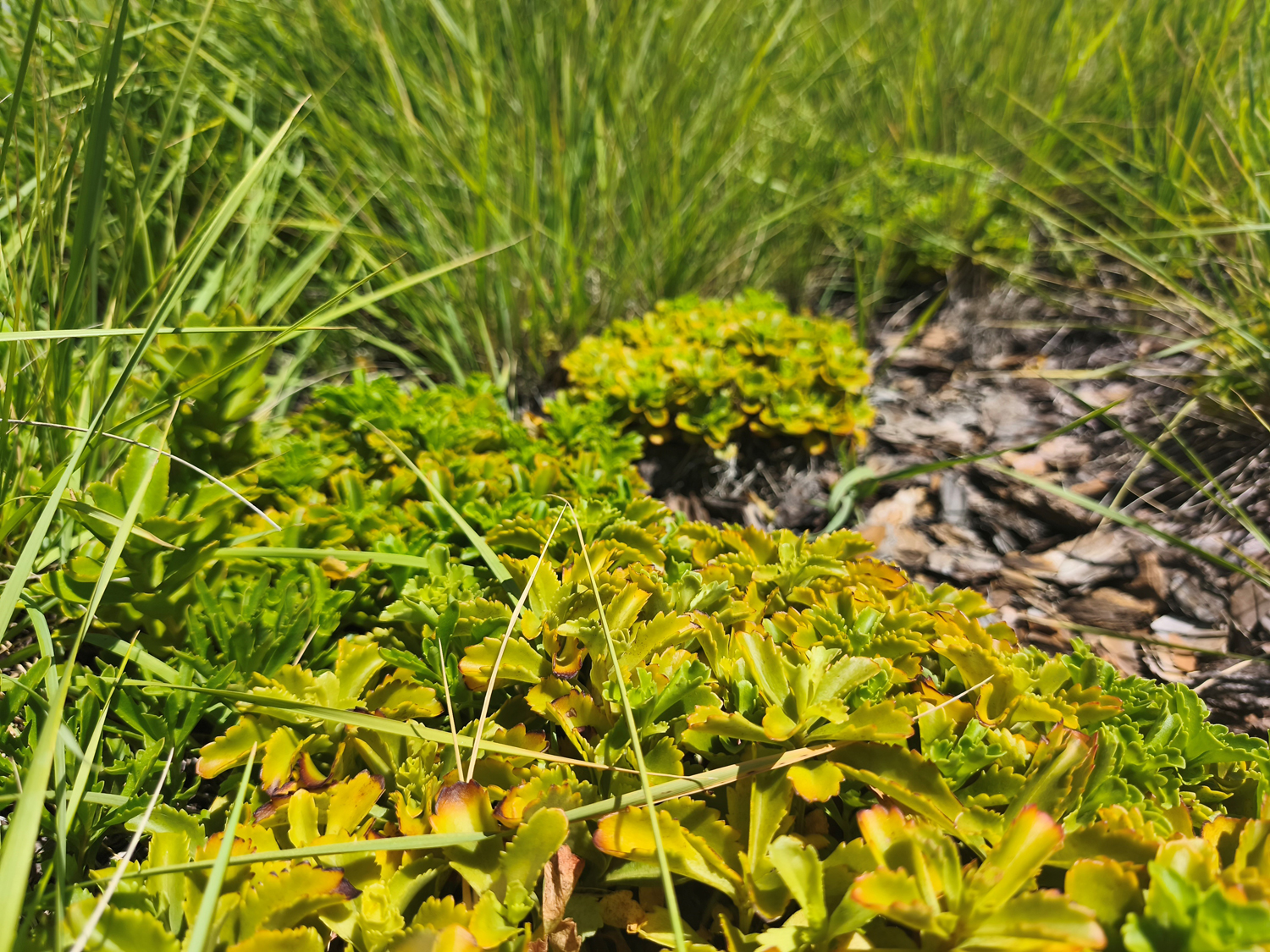 Sedum sp. planted on the green roof of C.E.I.P. Gabriela Mistral. © LIFE-mBiG
The results obtained to date point to a positive trend. While, during the early years of the project, the total number of recorded species barely exceeded twenty, the most recent surveys have identified more than one hundred species in the surroundings of the school. Furthermore, the progressive increase in the number of species shared between consecutive monitoring campaigns suggests that a significant proportion of the plant community has become permanently established, while new species continue to colonise the site and enrich the ecosystem. In the coming years, the overall trend is expected to move towards the stabilisation of these communities, with changes occurring mainly in the abundance and spatial distribution of species rather than in their presence or absence.
In the case of invertebrates, the 2026 campaign was affected by several logistical constraints that reduced the sampling effort and, consequently, the number of organisms recorded. Nevertheless, the presence of indicator species such as the pill bug (Armadillidium sp.) was confirmed. The persistence of this species constitutes an indication that favourable environmental conditions are being maintained within the facilities.
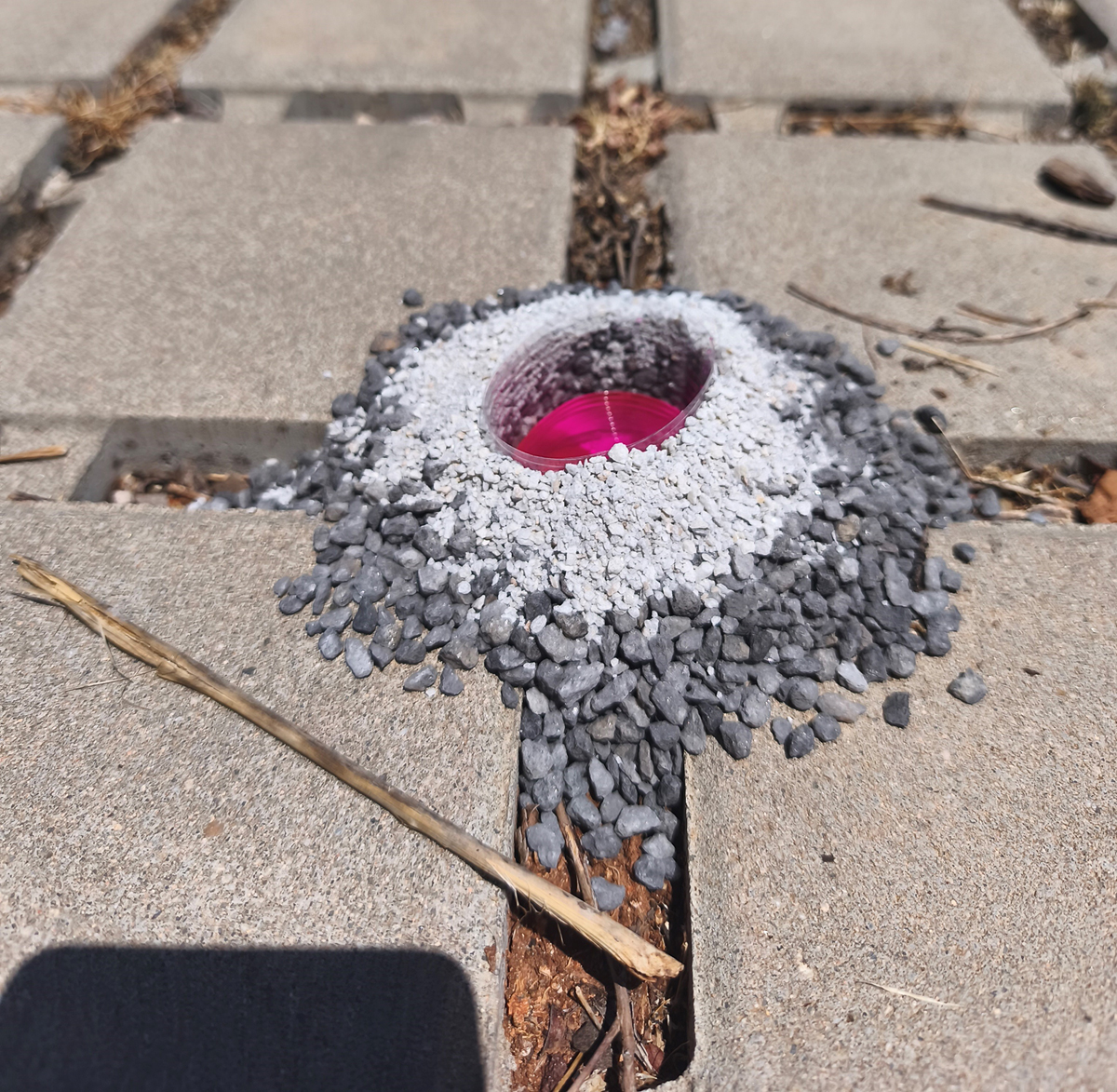 Pitfall trap installed during the July 2026 sampling campaign. © LIFE-mBiG
After five years of monitoring, the data highlight the capacity of NbS to promote biodiversity in educational settings, generating benefits that persist over time. The continued analysis of these ecosystems will provide a more accurate understanding of their long-term evolution and contribute scientific evidence regarding the effectiveness of these interventions in enhancing urban adaptation and resilience.
The next sampling campaigns, scheduled for 2027 under the After-LIFE Plan, will expand the historical dataset, which is available on the project website, and will continue to assess the response of local biodiversity, reinforcing the scientific and environmental legacy of LIFE-myBUILDINGisGREEN beyond the project’s official completion.
To stay up to date with all the latest news related to LIFE-myBUILDINGisGREEN, we recommend following the project’s Twitter and LinkedIn channels.